Specifying furniture for a client project: what to ask a maker before you commit
Specifying furniture for a client is an act of borrowed confidence. You commit someone else's money, and your own standing, on the strength of a photograph, a fabric memo and a maker's word about a date. If the piece lands late, or a shade off the sample, or two centimetres deeper than the alcove you drew around it, the client does not blame the workshop. They blame the person who specified it. Most of that exposure is removable, and it is removable at the front of the process rather than the back — in the questions asked before the order goes out, not in the chasing afterwards. What follows is the set worth putting to any made-to-order maker, and what a usable answer to each one looks like. Ask for the documentation before you ask for the price A price is easy to give and tells you very little. The documentation tells you whether the maker actually knows what they intend to build. Four things carry a specification through a project: A dimensioned drawing , in plan and elevation, showing the dimensions that govern use and not only the box the piece occupies. A written material specification naming each finish precisely enough to be repeated — this wood in this stain, this metal in this finish, this stone by name — so a second piece ordered eight months later matches the first. Physical samples of every finish in the combination, sent together rather than one at a time. A specification sheet that drops into an FF&E schedule without being retyped. A piece that can only be described in adjectives cannot be specified. If a maker cannot produce a drawing at enquiry stage, that is worth discovering before you present it, not after. It is also worth reading what a maker publishes about how far a piece can be adapted: the scope of what changes on an Elbra commission is set out under made to order , and the finishes themselves are catalogued in the materials palette . The dimensions that matter are rarely the overall ones Width, depth and height decide whether a piece fits the room. Seat height, arm height, back height, the clearance beneath a table's apron and the diameter of a base decide whether it works. A dining chair with a 47 cm seat, under a table whose underside sits at 72 cm, leaves 25 cm of thigh clearance — usable, and tight for a tall guest. Drop the seat to 44 cm and the clearance is comfortable, but the sitter now meets the tabletop three centimetres lower. Both are defensible; neither is visible in a photograph. Ask for those numbers in writing, and ask which of them are nominal. Upholstered dimensions carry tolerance, because foam, wadding and cover settle once the piece is made up; a timber frame does not. A maker who volunteers a tolerance figure before being pushed is telling you something useful about how the workshop runs. Treat the lead time as a position in the programme, not a number Elbra's pieces are made to order in 10 to 12 weeks. The number is the least useful part of it; where it sits in your programme is the whole of it. Work backwards from the day the client walks in. Subtract transit, and the window in which site is actually able to receive furniture. Subtract the build. Then subtract the approval loop that precedes the build — drawing sign-off, sample approval, fabric confirmation — because those weeks sit before the clock starts and they are the ones most often left out of a schedule. Which produces the single most valuable question you can ask: does the quoted lead time begin at order, or at final sign-off of drawings and fabric? The gap between those two dates can run to several weeks, and it is a common source of a date slipping without anyone doing anything wrong. Two practical consequences follow. The first is that furniture belongs at the close of design development, alongside the joinery package, rather than in the styling phase — upholstery in particular, because fabric approval is the longest loop and the one most exposed to a client's hesitation. The second is that you should establish, before ordering, what happens if site slips: who stores the piece, for how long, and at whose cost. A finished sofa with nowhere to go is a problem best solved in the order confirmation. Establish what can still change, and when each door closes Configurable is a broad word, and on a made-to-order piece the honest answer is sequential rather than binary. Everything stays open until the operation that fixes it. Dimensions close first, because they set the cutting list. Hard materials close next — the wood, the stone, the metal — because they are ordered and machined ahead of assembly. Finish and colour close later. Covers close last of all, since upholstery is the final operation on the bench. Ask the maker to walk you through that sequence for the specific piece, and note the date attached to each stage. It costs nothing at enquiry and it is the only way to answer the question you will eventually be asked, usually on a Friday afternoon: the client has changed their mind, what does that cost. Early in the sequence the answer is a line on a drawing. Late in it, the answer is weeks rather than money — which is the more expensive of the two, because money can be found and a completion date cannot. Settle two more things in the same conversation. Whether client-supplied fabric and leather are accepted, how many metres are needed, and who carries the risk if a fabric fails on the frame. And what a change request costs once the piece is in production, expressed as a rule rather than case-by-case goodwill. Presenting a combination nobody has photographed yet Here is the difficult moment in the client meeting. The photograph on the website shows the piece in oak with a pale linen. You are proposing walnut, a deep bouclé and a brushed brass foot, and your entire evidence base is three pieces of material the size of a postcard. Two things close that gap, and they do different work. Physical samples answer colour and hand, and they should be laid together, in the client's own room, at the hour of day the room is used — a north-facing room at four in the afternoon is not the light the sample was chosen in. A 3D configurator answers form: how a finish divides across a piece, where the metal actually reads at scale, whether a contrast that looks confident at swatch size survives at chair size. Elbra's configurator builds the combination on the real geometry and puts it on screen while the client is still in the room. Use both, and do not let either stand in for the other — a screen renders colour under lighting conditions you do not control, and a postcard of fabric tells you nothing about proportion. For your own visualisations, ask whether the maker will supply a 3D model. Dropping the real geometry into a scheme is faster than approximating it, and it removes the quiet error where the rendered sofa is a hand's width shorter than the one that arrives. What a trade relationship should include beyond the terms Commercial terms are the least interesting part of a trade programme. The parts that return time to your practice are less advertised: a contact who knows which project you are calling about without being reminded; drawings that arrive on the first request; samples posted in days rather than weeks; and a maker willing to say plainly that something cannot be done, instead of agreeing in the meeting and discovering it in week six. Elbra's trade programme includes a resource library with specification material and downloadable 3D models, and specification and project support covers commissions where furniture sits inside a larger scheme. The list above applies whoever you specify with; it is simply easier to check against a maker that has written its answers down. The strongest due diligence remains the oldest one. Elbra's atelier is in Paços de Ferreira, in the north of Portugal, the region long known as the country's furniture-making capital, and it receives visits by appointment . An afternoon watching panels come off a machining centre and springs being tied by hand tells you more about whether a date will be met than any amount of documentation — and it is the one form of evidence a client never asks you to justify.
Portugal's furniture country: why the region matters more than the label
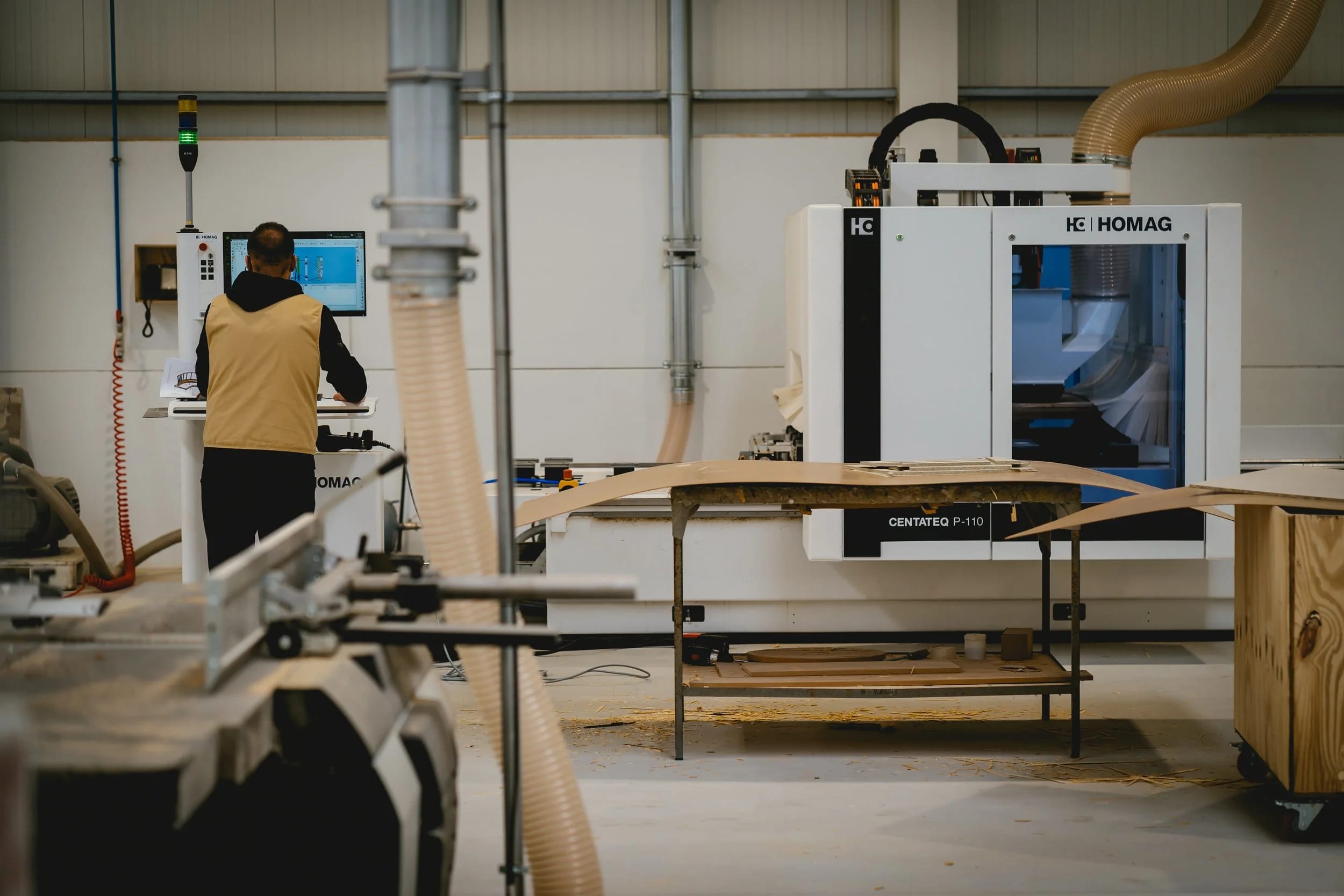
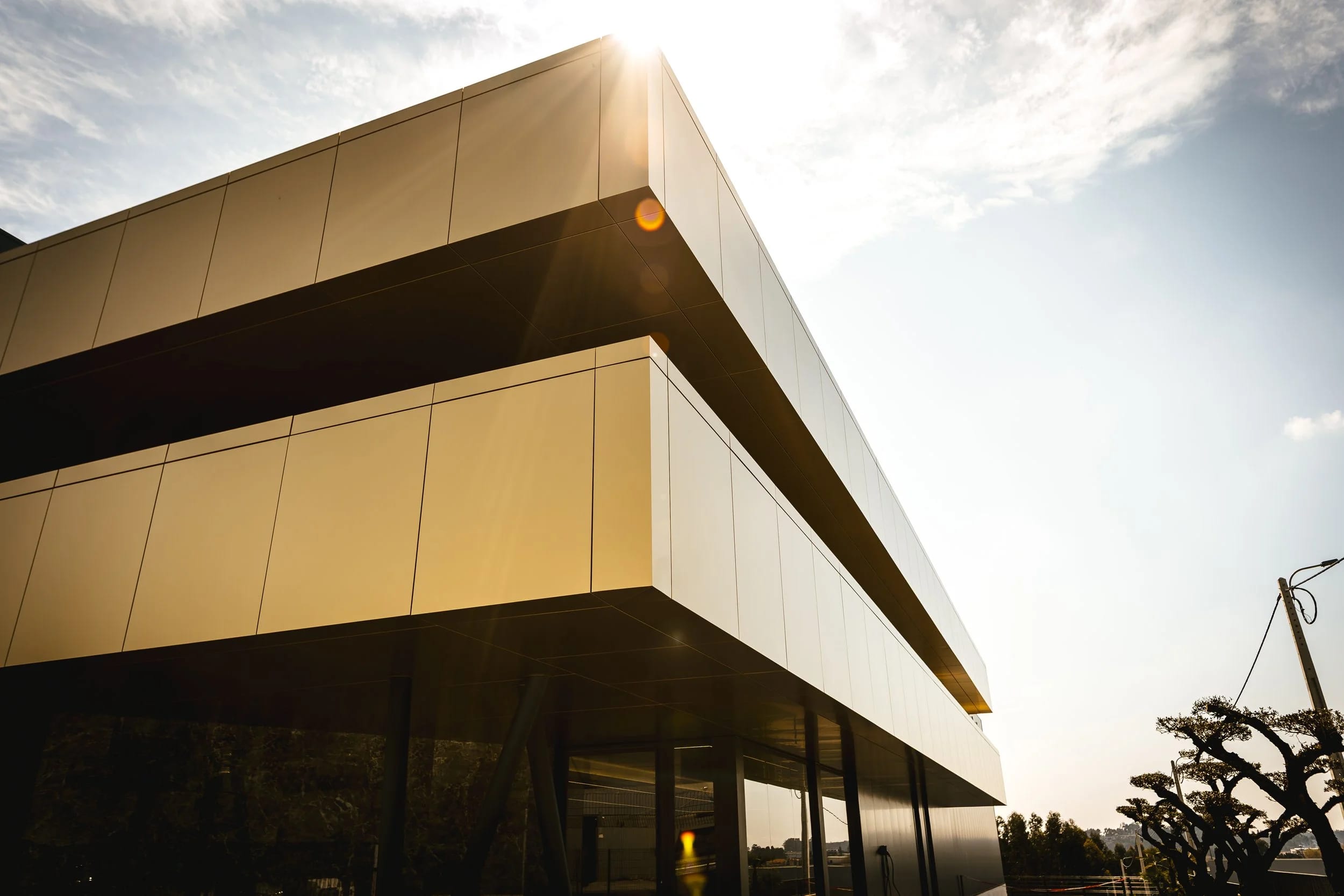
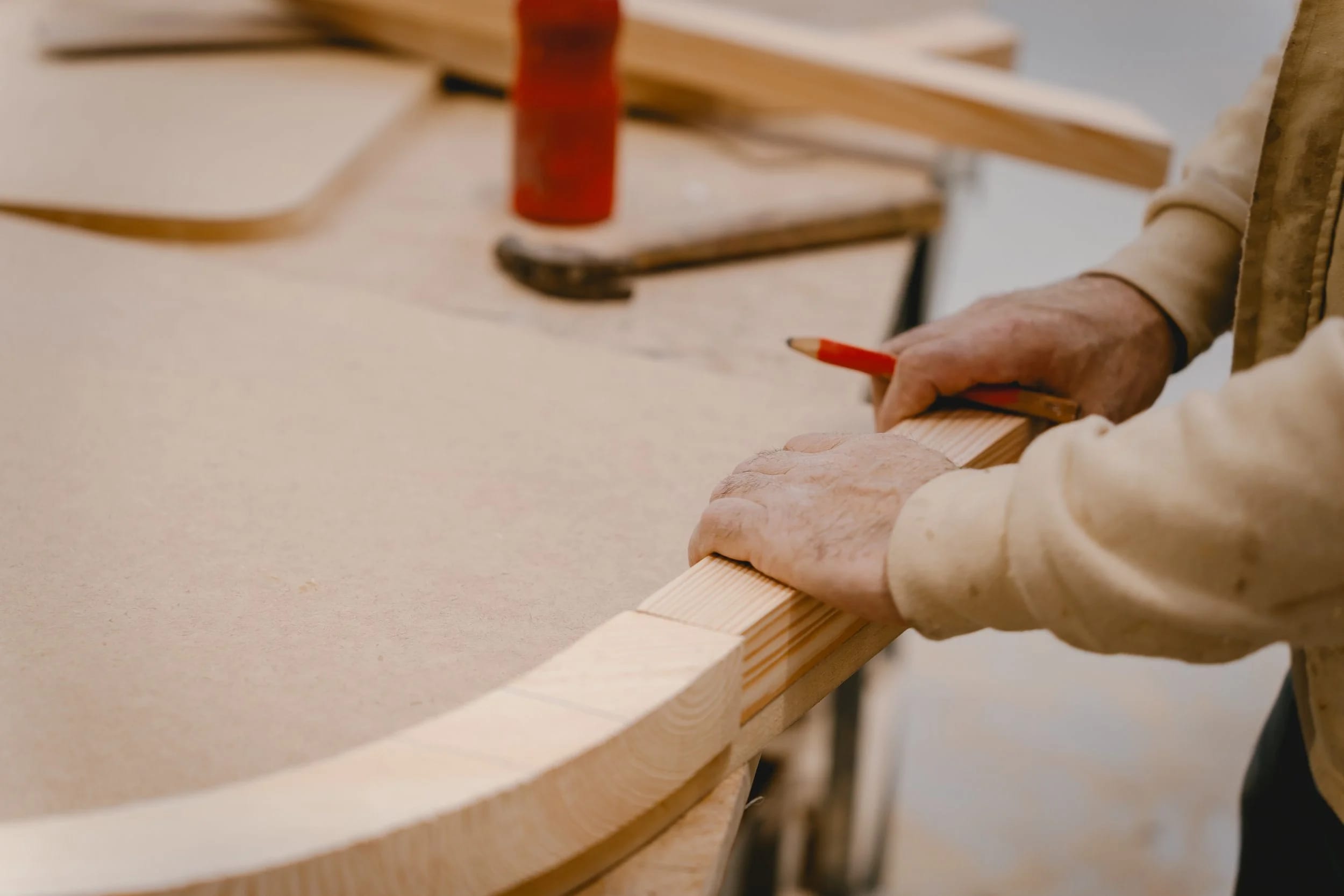
The label under a sofa tells you where it was assembled. It does not tell you who tied the springs, whether the frame was drawn at full size before anything was cut, or how far the finishing shop stood from the bench where that frame was built. Those things decide how a piece looks in its tenth year, and most of them are settled by geography long before a client sees a drawing. Our atelier is in Carvalhosa, on the Freamunde side of Paços de Ferreira, in the north of Portugal. Furniture is made in this area at a density that has no real equivalent elsewhere in the country, and the explanation has less to do with heritage than with distance. A furniture region, not a single factory Paços de Ferreira and the municipalities around it are known as the Capital do Móvel — Portugal's furniture capital. The phrase does not describe one large plant. It describes a density of small and mid-sized businesses each doing something narrow, and doing it constantly: frame makers, veneer and board suppliers, timber merchants, foam and fibre houses, spray and lacquer shops, upholsterers, metalworkers, glass cutters, stone yards, hardware factors, and the vans that spend the day carrying parts between all of them. Drive ten minutes in any direction and you pass a dozen of them behind unmarked gates. Portugal supplies furniture to brands that sell it under their own names in other countries, and a good deal of that work passes through workshops of exactly this kind — which is why the origin of a piece is usually quieter than its label. The region can quote a piece, prototype it, finish it and crate it without the work ever leaving a small radius. For us that is not a business model, it is simply where we are: our suppliers are our neighbours, and a supplier who is also a neighbour behaves differently. What proximity buys: a correction made in a morning A prototype armchair comes off the bench. Someone sits in it. The back is a degree or two too upright, the arm reads heavy from the doorway, and the seat is deeper than the drawing led anyone to expect. In a dispersed supply chain each of those is an email, a revised drawing, a shipping note and a wait. Here the frame maker is a few minutes away, the foam supplier a few minutes further, and the finishing shop is on the way back. The angle is recut, the arm re-shaped, and a fresh finish sample sprayed and dry before the end of the day. The point is not speed for its own sake. It is that the cost of changing your mind stays low, so more changes actually get made, and the piece that finally ships has been argued with more times than it otherwise would have been. When we say a piece is made to order in ten to twelve weeks , with fabric, wood, stone, metal finish and dimensions all open, that promise rests on this geography. A workshop that has to send a frame four hundred kilometres to be sprayed cannot sensibly offer it. It also decides what the material palette can be. When a stone yard and a lacquer shop are both within reach, an unusual marble, or a colour matched to a client's own sample, is a conversation rather than a special order with a minimum quantity attached. The knowledge that is passed on at the bench The second thing a region like this produces is people. Marking out a curve so that it stays fair the whole way around a frame. Reading a board before cutting it. Judging by hand, not by eye, when a surface has been sanded enough and when another pass will start to soften an edge that should stay crisp. Tying a sprung seat so that it is still even after a decade of being sat in. None of that is learned from a manual. It is learned standing beside someone who has done it several thousand times, and being corrected. Where workshops are dense, that transfer happens as a matter of course. A cabinetmaker who leaves one bench finds another a few kilometres away, so the skill stays in the area instead of dispersing into other trades. An upholsterer here has usually seen more seats than one working where furniture is one industry among many. This is not romance about craft; it is a labour market, and it is the reason a hand-tied seat is still an ordinary thing to ask for rather than a revival. Machines for repetition, hands for judgement It would be dishonest to describe these workshops as quiet sheds full of chisels. Ours has a CNC machining centre with a control screen and extraction ducting overhead, panel saws worked off a monitor, and stacks of cut panels and veneer waiting on trestles. The machining centre and the pencil on the curved frame are under the same roof. The interesting question is not machine or hand. It is which one does what. Machines are better than people at anything that has to be identical: six curved backs that match across a run, joints cut to the same tolerance at the end of a batch as at the start, a sequence of holes that lets a large piece be knocked down for shipping and reassembled true on the other side. They are patient, and they are as accurate at four in the afternoon as at nine in the morning. What they cannot do is judge. A machine cannot feel that a board is about to move, or ease an edge so that a hand passing over it finds nothing to catch on, or decide that a curve which is geometrically correct still reads heavy in the room. It cannot sand across a joint by feel, set the tension in a sprung seat, or lay a hide so the grain runs consistently across a back. Where a part is repeated, the machine does it, and does it better than we would. Where a part requires a decision, a person makes the decision. That division is what the work of the atelier is organised around, and it is more useful to a buyer than any argument about tradition. What "made in Portugal" does not guarantee It tells you where a piece was assembled. On its own it says nothing about how. These are the questions worth asking here, of us or of anyone else. What is inside the frame. Kiln-dried hardwood, properly jointed, or stapled softwood and sheet material. Both leave this region every week. How the seat is suspended. Hand-tied springs, serpentine springs, webbing, or a foam block on a platform. Each is a legitimate choice at a different price and a different lifespan, and the answer should come without hesitation. Where the finishing happens. Colour matching, and any later repair, are far easier when the sprayer and the cabinetmaker answer to the same person. How much can genuinely change. "Customisable" sometimes means a choice of four covers. Ask whether dimensions can move, at what point in the process a change stops being free, and whether the workshop will work to a fabric you supply. Whether you can see it. A workshop that receives visitors has usually thought about what visitors will find. Those five questions separate a piece made to order from a stocked piece with options, and they do it faster than any origin label. If you specify professionally, our trade programme answers them in writing; the shorter version is in the questions we are asked most . The region will go on supplying names other than its own, and there is nothing wrong with that. But the case for making here was never the label. It is that a difficult piece can be corrected on a Tuesday morning by three people who can walk to each other — which is worth seeing, if you ever arrange to come to the atelier .
Bespoke, custom, made to order: what the words actually mean
Bespoke. Custom. Made to order. The three phrases turn up on the same product page, in the same brochure, sometimes in the same sentence — and they describe three genuinely different things. The blur is convenient for whoever is selling and expensive for whoever is buying, because the distinction decides how long you wait, how much of the piece you actually control, and what can be done if the thing that arrives is not the thing you pictured. We build furniture to order, so we have a position in this. What we can usefully offer is precision about where the lines fall, including where they fall against us. What the three words describe Bespoke: drawn from nothing, for one room A bespoke piece does not exist before it is commissioned. It begins as a drawing made for a particular room, a particular use, sometimes a particular wall. Proportions, joinery, the profile of an arm, the fall of a seat — all of it is resolved for that one job, and then somebody builds it, usually for the first time. The consequences follow: a longer programme, drawings to approve, occasionally a prototype, and a price set per project rather than per product, because nobody has built the thing before and there is no experience to quote from. Custom: a standard piece, altered within defined limits Custom starts from something that already exists in a catalogue and changes part of it. The manufacturer publishes what may be changed: this range of fabrics, these three wood tones, that leg instead of this one. Everything outside the list is fixed, because the patterns, the tooling and the line are built around the standard version. In practice, custom very often resolves to one thing — a fabric swap on a fixed frame. That is a real service and for plenty of projects it is exactly enough. It is simply not the same as having a piece made to your specification, and it should not be priced as though it were. Made to order: an existing design, built only once you buy it Made to order describes when a piece is built, not how much of it you can change. Nothing sits in a warehouse waiting to ship; the frame is cut after the order is placed. The design itself already exists — it was drawn and resolved by the maker before you arrived. This is where the range is widest, and where buyers most often assume something untrue. Some made-to-order houses will change only the covering. Others will move dimensions, change the wood, specify a different stone and a different metal, and build to a width that suits the wall you have. Both are accurately described as made to order. Only one of them gives you a piece that answers to your room. Inside the industry none of this is obscure. The terms drift because bespoke carries the most weight, so it gets attached to work that is catalogue production with three fabric options — and because nobody is obliged to define it. There is no standard, no certification, no regulator. The word is free to use. What changes for the buyer Four things move with the distinction, and only one of them is price. Time. Stock ships in days because it was built before you existed as a customer. Made to order runs in weeks or months, because it is built after. Bespoke adds the drawing and approval stage on top of that, and a first-off piece often reveals something that has to be redone. If a supplier quotes a bespoke programme in the same breath as a stock lead time, one of the two is not what it says it is. Cost. Custom is usually a base price with surcharges — the piece plus the upgrade. Made to order is priced per design and per specification, so a change of stone or a wider frame moves the number rather than adding a line to it. Bespoke is priced per project, because there is nothing to compare it against. The useful question is never what it costs but what the price includes, and where it stops holding. Latitude. This is the real test, and it is easy to run. Ask for something that is not on the options page — a seat five centimetres lower, a sofa built to 2.4 metres rather than 2.2. If the answer is a list, you are buying custom. If the answer is a question about your room, you are somewhere else. Recourse. Worth settling before you sign. With stock, a fault is a replacement from the warehouse. With anything built once, for you, there is no shelf to draw from — the remedy is remaking, which means waiting again. That is why the approval stage matters more than the guarantee: physical samples in the light of the actual room, dimensions confirmed in writing, drawings signed off before anything is cut. Any maker worth the commission would rather argue about a sample than a finished sofa. Where Elbra sits, and why Our pieces are designed in-house and built only once ordered. The design already exists — drawn, proportioned and resolved before you see it — and then the fabric, the wood, the stone, the metal finish and the dimensions are specified by the client. That is made to order at the wide end of the range, and it is deliberately neither of the other two things: not a catalogue with a fabric list attached, and not fitted carpentry drawn from scratch for a single alcove. The part that is unusual is being able to see the specification before committing to it. Many of our pieces carry a 3D configurator that renders the actual combination — this wood with this stone, that metal against that cloth — rather than asking you to assemble it in your head from swatches on a screen. It answers the question a sample card cannot: not whether each element works, but whether they work together. It does not replace the samples. Stone reads differently slab to slab and cloth differently dye lot to dye lot, so the final finishes are always confirmed in hand , against the light of the room they are going into. The configurator narrows five plausible schemes to the one worth sampling. That is its whole job. Why the wait is ten to twelve weeks Made to order has one cost that no amount of good service removes: you wait. Our lead time is ten to twelve weeks. If a project completes in three weeks, made to order is the wrong purchase and no one is served by pretending otherwise. The time is not queueing. Our atelier is in Carvalhosa, Freamunde, in Paços de Ferreira — the area of northern Portugal long known as the Capital do Móvel, with a manufacturing base deep enough that a great many international brands have their furniture built here. What happens there is a mix. Panels are cut on CNC machinery, because a machine cuts a repeated panel more accurately than a person and there is no virtue in pretending otherwise. Then the work slows down. Frames are marked out at the bench with a pencil. They are sanded by hand, in stages. Seats are sprung and tied by hand, twine over hessian, the way upholstery has been built for a very long time because nothing faster holds its shape as well. Added to that: stone is selected slab by slab, cloth is ordered per commission rather than pulled from a rack, and lacquer and finish need time to cure that cannot be compressed. Ten to twelve weeks is what those steps take when nobody is asked to hurry. What to ask before you commit Five questions will place any supplier in one of the three categories, usually within a minute. Is this design yours, or is it being drawn for me? That single answer separates bespoke from the other two. What can change that is not on the options list — specifically, can the dimensions change? Dimensions are the honest test. Fabric choice is cheap to offer; a different width means recutting a frame. What am I approving before anything is cut, and in what form? Physical samples, a dimensioned drawing, a photograph of the actual slab. Anything approved on a screen alone is not approved. When does the clock start, and what starts it? Lead times are quoted from deposit, from sample sign-off or from order confirmation, and the gap between those dates can be weeks. Who makes it, and where? Ask plainly. A maker who owns the bench will tell you the town. A brand that subcontracts will tell you the continent. The vocabulary matters because all three models are legitimate, and the wrong one for your project only shows up at delivery — a beautiful piece thirty centimetres too wide for the wall, or a twelve-week wait for something you could have had in two. Knowing which of the three you are buying is the difference between choosing furniture and being surprised by it. If you are specifying for a project rather than a room, the trade programme covers the parts of this that only matter at scale; if you would rather see the bench than read about it, the atelier receives visits by appointment .
A Remarkable Debut in the Hamptons
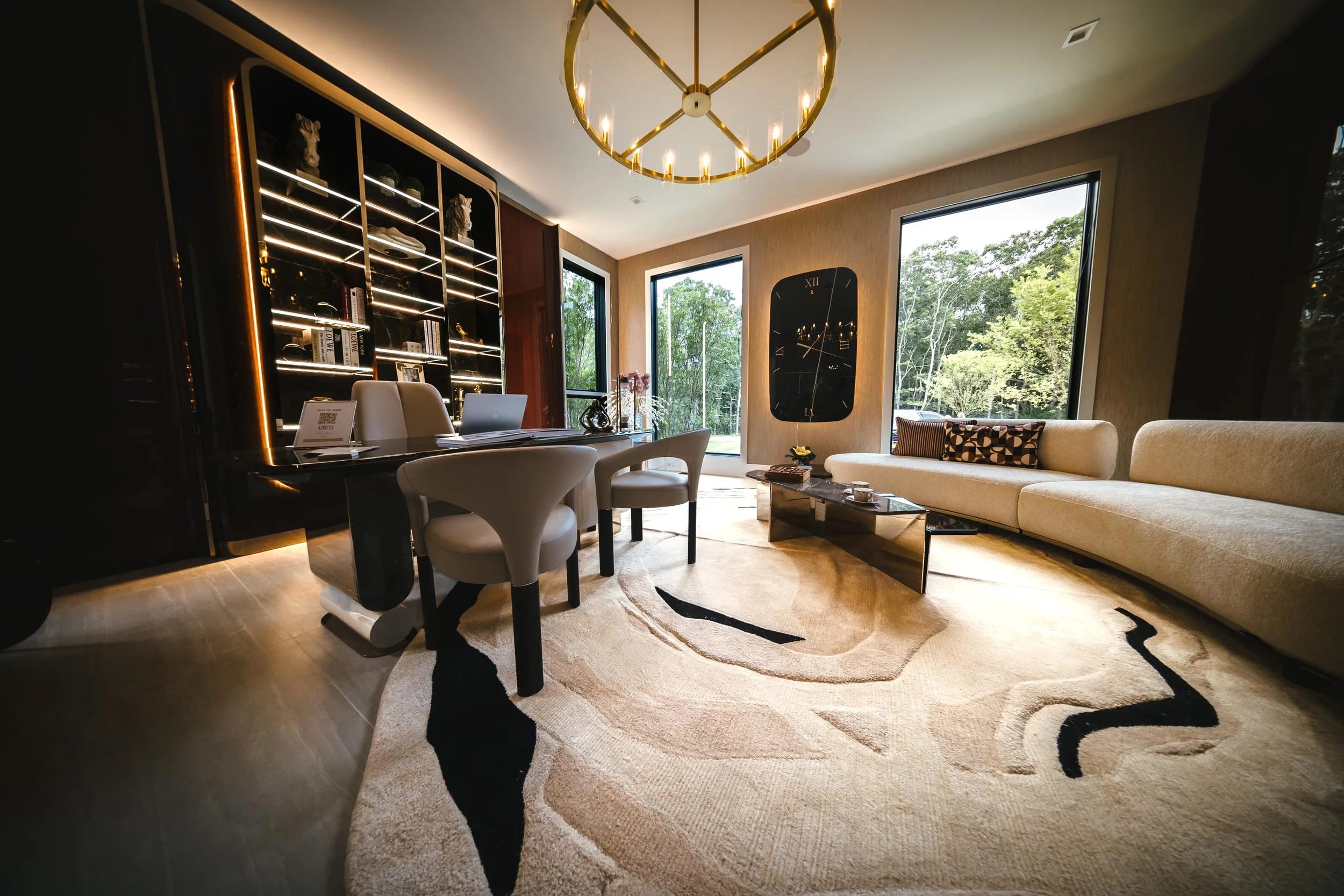
This summer, Elbra had the honour of participating in one of the most prestigious events in the American design calendar: the Hamptons Designer Showhouse . Held inside a stunning 16-million-dollar residence in the heart of the Hamptons, the event brought together more than 20 acclaimed designers and brands. Each one contributed to transforming the house into a celebration of creativity, craftsmanship, and elevated living. Elbra was invited to design the study room , where we presented a curated selection of our signature pieces: Blosse Sofa , Ticol Armchair , Aurora Coffee Tabl e , Rowan Console , and the Rowan Mirror with a incorporated television. With sculptural presence and refined materiality, each piece captured the attention of visitors, editors, and design professionals. #block-4a90b8883297a04bbc29 { --stroke-style: none;--stroke-thickness: 6px; --tweak-text-block-background-color: initial; } #block-4a90b8883297a04bbc29 .sqs-html-content { --tweak-text-block-padding: 6% 6% 6% 6%; --tweak-text-block-padding: initial; } #block-4a90b8883297a04bbc29 { mix-blend-mode: var(--tweak-text-block-blend ); border-radius: var(--tweak-text-block-radius); } #block-4a90b8883297a04bbc29 { --tweak-text-block-radius: 0px 0px 0px 0px; } #block-4a90b8883297a04bbc29 { } @media screen and (max-width: 767px) { #block-4a90b8883297a04bbc29 { } } @media screen and (max-width: 767px) { #block-4a90b8883297a04bbc29 .sqs-html-content { } } @media screen and (max-width: 767px) { } Blosse Sofa Ticol Armchair Rowan Console & Rowan Mirror The feedback was both encouraging and inspiring, reinforcing our vision for timeless interiors defined by character and craft. #block-yui_3_17_2_1_1754509139653_4810 { --stroke-style: none;--stroke-thickness: 6px; --tweak-text-block-background-color: initial; } #block-yui_3_17_2_1_1754509139653_4810 .sqs-html-content { --tweak-text-block-padding: 6% 6% 6% 6%; --tweak-text-block-padding: initial; } #block-yui_3_17_2_1_1754509139653_4810 { mix-blend-mode: var(--tweak-text-block-blend ); border-radius: var(--tweak-text-block-radius); } #block-yui_3_17_2_1_1754509139653_4810 { --tweak-text-block-radius: 0px 0px 0px 0px; } #block-yui_3_17_2_1_1754509139653_4810 { } @media screen and (max-width: 767px) { #block-yui_3_17_2_1_1754509139653_4810 { } } @media screen and (max-width: 767px) { #block-yui_3_17_2_1_1754509139653_4810 .sqs-html-content { } } @media screen and (max-width: 767px) { } A special highlight was the custom-made built-in book cabinet , designed and produced entirely by Elbra. More than a functional feature, it became the soul of the space and a clear expression of our made-to-order capabilities. #block-yui_3_17_2_1_1755019867815_5784 { --stroke-style: none;--stroke-thickness: 6px; --tweak-text-block-background-color: initial; } #block-yui_3_17_2_1_1755019867815_5784 .sqs-html-content { --tweak-text-block-padding: 6% 6% 6% 6%; --tweak-text-block-padding: initial; } #block-yui_3_17_2_1_1755019867815_5784 { mix-blend-mode: var(--tweak-text-block-blend ); border-radius: var(--tweak-text-block-radius); } #block-yui_3_17_2_1_1755019867815_5784 { --tweak-text-block-radius: 0px 0px 0px 0px; } #block-yui_3_17_2_1_1755019867815_5784 { } @media screen and (max-width: 767px) { #block-yui_3_17_2_1_1755019867815_5784 { } } @media screen and (max-width: 767px) { #block-yui_3_17_2_1_1755019867815_5784 .sqs-html-content { } } @media screen and (max-width: 767px) { } Custom built-in From the preview gala to the daily visits from design lovers and industry peers, the response was overwhelmingly positive. It was a proud moment for our team and a powerful reminder of what thoughtful design can achieve: creating emotion, identity, and presence. We would love to connect and explore how Elbra can be part of your next project. #block-yui_3_17_2_1_1754509139653_6857 { --stroke-style: none;--stroke-thickness: 6px; --tweak-text-block-background-color: initial; } #block-yui_3_17_2_1_1754509139653_6857 .sqs-html-content { --tweak-text-block-padding: 6% 6% 6% 6%; --tweak-text-block-padding: initial; } #block-yui_3_17_2_1_1754509139653_6857 { mix-blend-mode: var(--tweak-text-block-blend ); border-radius: var(--tweak-text-block-radius); } #block-yui_3_17_2_1_1754509139653_6857 { --tweak-text-block-radius: 0px 0px 0px 0px; } #block-yui_3_17_2_1_1754509139653_6857 { } @media screen and (max-width: 767px) { #block-yui_3_17_2_1_1754509139653_6857 { } } @media screen and (max-width: 767px) { #block-yui_3_17_2_1_1754509139653_6857 .sqs-html-content { } } @media screen and (max-width: 767px) { }
Rethinking the Sofa: Why Modular Matters
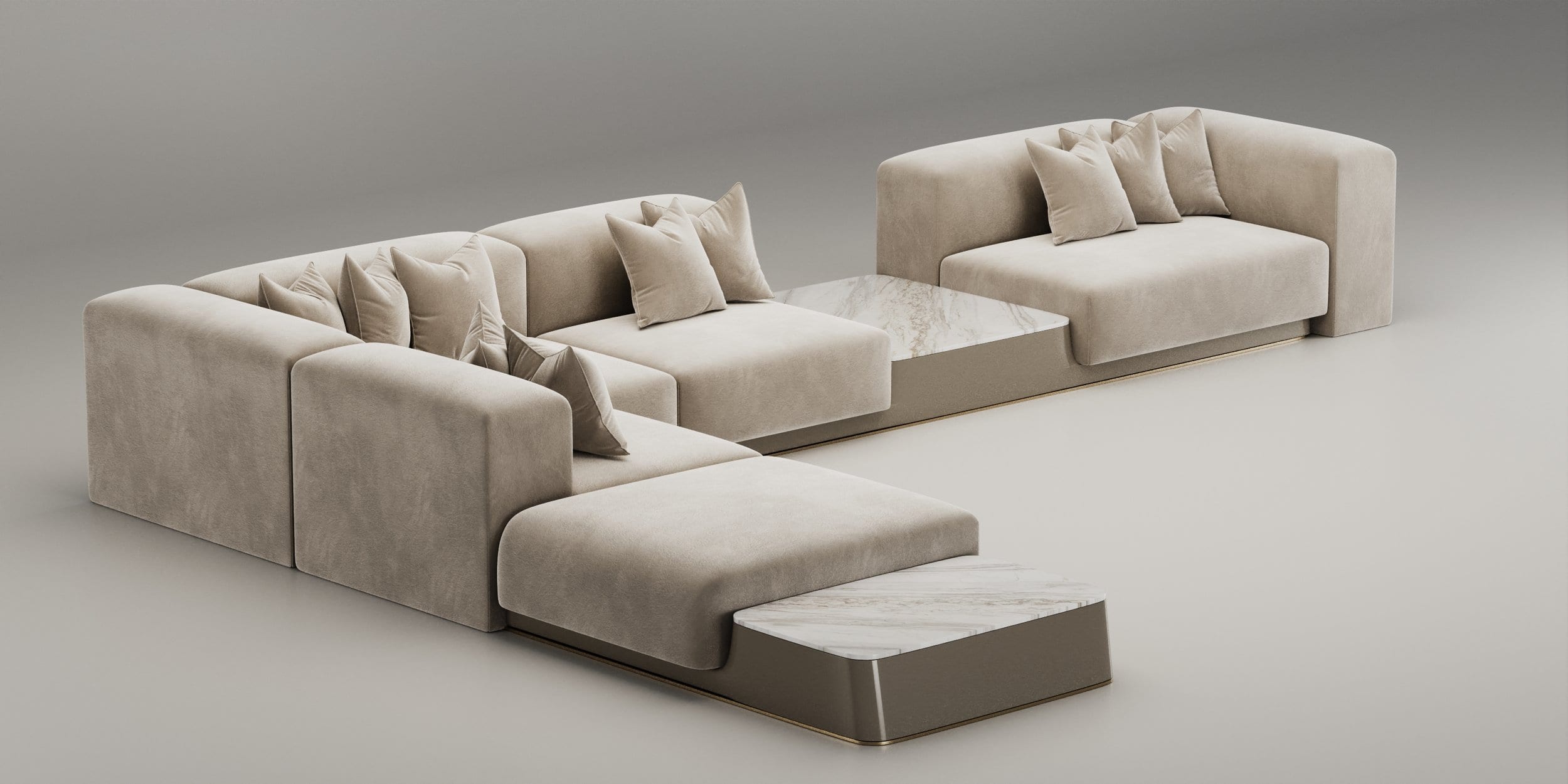
In today’s world of refined interiors, the sectional sofa is more than just a seating solution, it’s a central design piece, a spatial tool, and a reflection of personal lifestyle. Its modular design adapts to different environments, offering flexibility, elegance, and comfort in one cohesive system. #block-7f1796fdf0e9a33ea560 { --stroke-style: none;--stroke-thickness: 6px; --tweak-text-block-background-color: initial; } #block-7f1796fdf0e9a33ea560 .sqs-html-content { --tweak-text-block-padding: 6% 6% 6% 6%; --tweak-text-block-padding: initial; } #block-7f1796fdf0e9a33ea560 { mix-blend-mode: var(--tweak-text-block-blend ); border-radius: var(--tweak-text-block-radius); } #block-7f1796fdf0e9a33ea560 { --tweak-text-block-radius: 0px 0px 0px 0px; } #block-7f1796fdf0e9a33ea560 { } @media screen and (max-width: 767px) { #block-7f1796fdf0e9a33ea560 { } } @media screen and (max-width: 767px) { #block-7f1796fdf0e9a33ea560 .sqs-html-content { } } @media screen and (max-width: 767px) { } Upholstered modules joined by metal accents, creating an integrated surface What Is a Sectional Sofa? A sectional sofa consists of multiple independent modules — including chaises, corner units, ottomans, and even built-in side tables — that can be configured and rearranged freely. Whether you need a compact lounge or a sprawling social space, the possibilities are endless. #block-yui_3_17_2_1_1749313559906_2751 { --stroke-style: none;--stroke-thickness: 6px; --tweak-text-block-background-color: initial; } #block-yui_3_17_2_1_1749313559906_2751 .sqs-html-content { --tweak-text-block-padding: 6% 6% 6% 6%; --tweak-text-block-padding: initial; } #block-yui_3_17_2_1_1749313559906_2751 { mix-blend-mode: var(--tweak-text-block-blend ); border-radius: var(--tweak-text-block-radius); } #block-yui_3_17_2_1_1749313559906_2751 { --tweak-text-block-radius: 0px 0px 0px 0px; } #block-yui_3_17_2_1_1749313559906_2751 { } @media screen and (max-width: 767px) { #block-yui_3_17_2_1_1749313559906_2751 { } } @media screen and (max-width: 767px) { #block-yui_3_17_2_1_1749313559906_2751 .sqs-html-content { } } @media screen and (max-width: 767px) { } Full modular layout — a fluid arrangement of comfort and refined detail. The Advantages of Customization Layout Flexibility Adapt the layout to fit your space: from small apartments to large open-plan homes. Rearrange the modules any time without needing a whole new piece. Material & Finish Personalization Choose from a curated selection of fabrics, from soft velvets to linen and performance textiles. Customize the base in brushed metal, painted steel, or natural wood and incorporate marble or wood side surfaces, as shown in Images 2 and 3. Built-in Functionality Integrated tabletops and marble trays offer convenience without disrupting the design flow. Additional features like hidden storage, built-in lighting, or USB ports can be incorporated. Tailored Comfort Select your preferred foam density, upholstery layers, and cushion fill to match your comfort preferences. Ergonomic backs and plush pillows complete the personalized experience. Optimized Space Usage Modular systems make the most of circulation space. Ideal for open layouts where a sofa can define zones like living, dining, or workspace without heavy partitioning. #block-yui_3_17_2_1_1749313559906_10945 { --stroke-style: none;--stroke-thickness: 6px; --tweak-text-block-background-color: initial; } #block-yui_3_17_2_1_1749313559906_10945 .sqs-html-content { --tweak-text-block-padding: 6% 6% 6% 6%; --tweak-text-block-padding: initial; } #block-yui_3_17_2_1_1749313559906_10945 { mix-blend-mode: var(--tweak-text-block-blend ); border-radius: var(--tweak-text-block-radius); } #block-yui_3_17_2_1_1749313559906_10945 { --tweak-text-block-radius: 0px 0px 0px 0px; } #block-yui_3_17_2_1_1749313559906_10945 { } @media screen and (max-width: 767px) { #block-yui_3_17_2_1_1749313559906_10945 { } } @media screen and (max-width: 767px) { #block-yui_3_17_2_1_1749313559906_10945 .sqs-html-content { } } @media screen and (max-width: 767px) { } Sculpted laquered base paired with a marble top, seamlessly attached to the seat. Long-Term Benefits Sustainable Design : Replace or reupholster a single module instead of discarding the entire sofa. Value-Adding : A custom, high-end piece enhances the perceived value of the space. Scalable Investment : Start with a core configuration and expand it over time as your needs grow. Final Thoughts Custom sectional sofas are not just a trend, they are a thoughtful solution for dynamic lifestyles and elevated design. Elbra, we see every piece as an opportunity to merge technical craftsmanship with timeless style. Whether you're furnishing a home, hospitality project, or showroom, modular seating allows for complete creative freedom, and the result is always unique. Let’s design together. Get in touch to explore how we can tailor the perfect sectional system for your next project. #block-yui_3_17_2_1_1749313559906_18950 { --stroke-style: none;--stroke-thickness: 6px; --tweak-text-block-background-color: initial; } #block-yui_3_17_2_1_1749313559906_18950 .sqs-html-content { --tweak-text-block-padding: 6% 6% 6% 6%; --tweak-text-block-padding: initial; } #block-yui_3_17_2_1_1749313559906_18950 { mix-blend-mode: var(--tweak-text-block-blend ); border-radius: var(--tweak-text-block-radius); } #block-yui_3_17_2_1_1749313559906_18950 { --tweak-text-block-radius: 0px 0px 0px 0px; } #block-yui_3_17_2_1_1749313559906_18950 { } @media screen and (max-width: 767px) { #block-yui_3_17_2_1_1749313559906_18950 { } } @media screen and (max-width: 767px) { #block-yui_3_17_2_1_1749313559906_18950 .sqs-html-content { } } @media screen and (max-width: 767px) { } Let's meet #block-yui_3_17_2_1_1749313559906_20761 { --sqs-block-content-flex: 0; }
Designing a Luxurious Bedroom: A Case Study in Elegance and Comfort
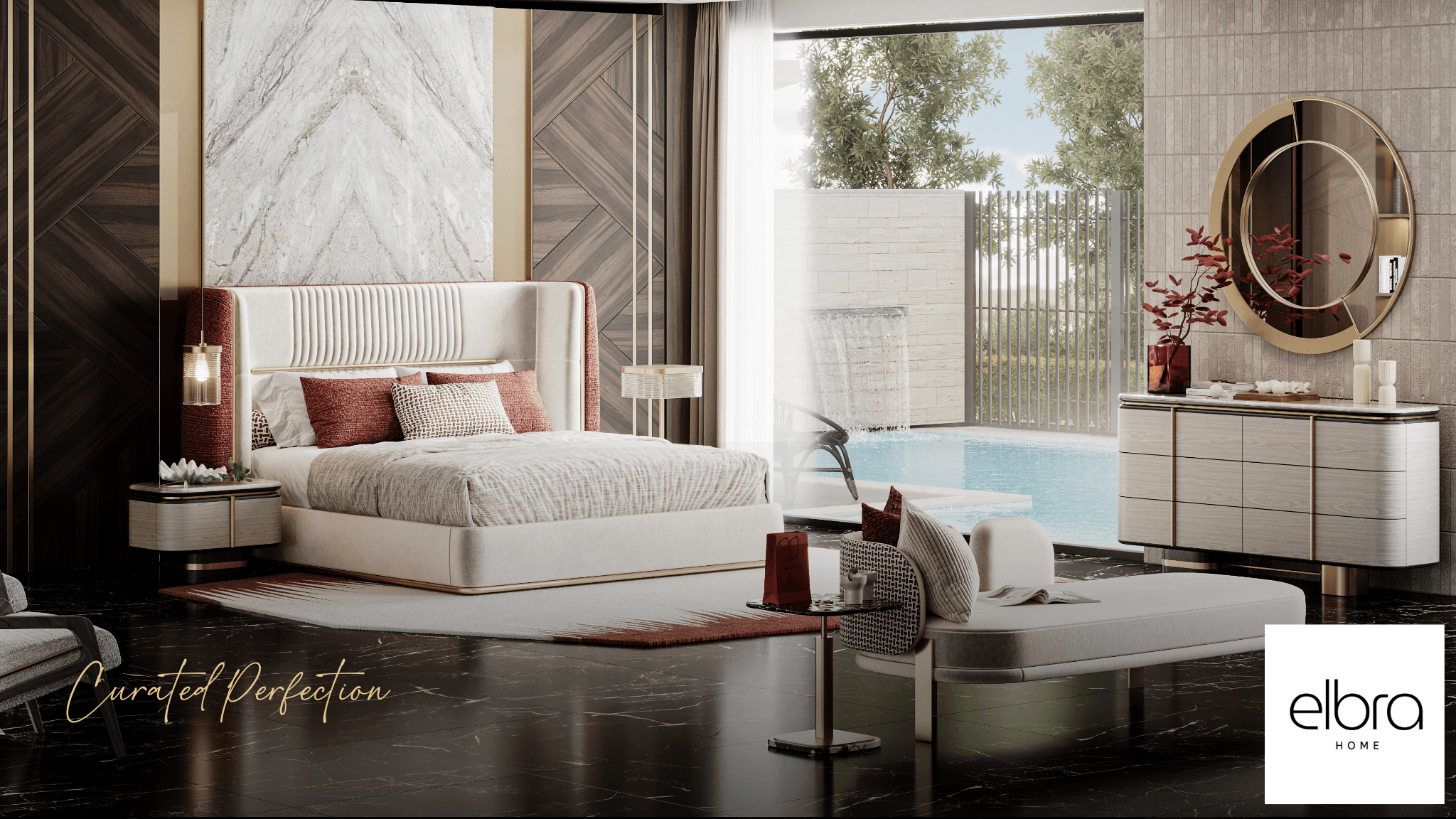
A meticulously curated space designed for those who appreciate the art of luxury living In the world of high-end interior design, a luxurious bedroom is more than just a place to sleep; it is a sanctuary of comfort, sophistication, and timeless elegance. A well-designed bedroom integrates premium materials, refined color palettes, and bespoke furniture, creating an inviting and opulent atmosphere. This article explores the key principles of luxurious bedroom design, using the featured bedroom collection as a case study. 1. Establishing a Cohesive Theme Luxury interior design thrives on cohesion. The featured bedroom follows a modern contemporary theme, blending neutral tones with rich accents. The interplay between soft beige upholstery and deep, warm reds creates a space that feels both soothing and elegant. The addition of gold accents in furniture and decor elements elevates the ambiance, adding a refined touch of opulence. 2. High-End Materials for a Premium Feel Material selection is crucial in luxury design. This bedroom incorporates a mix of: Marble : Seen in bedside tables and dresser tops, marble adds a sense of timeless grandeur. Velvet and Soft Textiles : The bed’s upholstery, seating, and cushions feature plush fabrics that enhance the tactile experience. Metallic Accents : Gold finishes on legs, handles, and decorative trims bring a sophisticated contrast to neutral elements. Dark Wood Paneling : Used on walls, this adds depth and richness to the space, enhancing its upscale appeal. 3. Bespoke Furniture & Functional Elegance Every piece of furniture in a luxury bedroom should be both aesthetically pleasing and functional. This design includes: A Grand Bed with a Statement Headboard : The bed features an oversized, upholstered headboard with detailed stitching, creating a focal point of the room. A Plush Chaise Lounge : Positioned strategically near the bed, this piece offers a space for relaxation and complements the overall design language. A Stylish Vanity Area : The sleek vanity table, combined with a matching chair and an elegant round mirror, transforms a simple corner into a high-end grooming space. Refined Storage Solutions : Nightstands and dressers with rounded edges and gold-trimmed handles balance functionality with artistry. #block-d7901a78a79a2d8273ea { --stroke-style: none;--stroke-thickness: 6px; --tweak-text-block-background-color: initial; } #block-d7901a78a79a2d8273ea .sqs-html-content { --tweak-text-block-padding: 6% 6% 6% 6%; --tweak-text-block-padding: initial; } #block-d7901a78a79a2d8273ea { mix-blend-mode: var(--tweak-text-block-blend ); border-radius: var(--tweak-text-block-radius); } #block-d7901a78a79a2d8273ea { --tweak-text-block-radius: 0px 0px 0px 0px; } #block-d7901a78a79a2d8273ea { } @media screen and (max-width: 767px) { #block-d7901a78a79a2d8273ea { } } @media screen and (max-width: 767px) { #block-d7901a78a79a2d8273ea .sqs-html-content { } } @media screen and (max-width: 767px) { } 4. Lighting: Setting the Mood Lighting in a luxury bedroom should be layered and thoughtfully placed. This room design incorporates: Pendant Lights : Suspended over nightstands, these fixtures provide a warm, intimate glow. Soft Ambient Lighting : Integrated LED lighting and floor lamps create a cozy yet sophisticated atmosphere. Natural Light Maximization : Floor-to-ceiling windows allow an abundance of daylight, highlighting the room’s premium textures and materials. 5. Decorative Accents & Personal Touches Luxury is in the details. The curated selection of accessories in this bedroom includes: Art Pieces & Statement Mirrors : The bold circular mirror above the dresser adds visual interest and depth. Textured Rugs & Throws : Soft underfoot textures in a gradient color scheme add layers of warmth and comfort. Bespoke Decorative Objects : Sculptural vases, designer books, and botanical elements add a sense of personal curation. #block-yui_3_17_2_1_1740309346280_3400 { --stroke-style: none;--stroke-thickness: 6px; --tweak-text-block-background-color: initial; } #block-yui_3_17_2_1_1740309346280_3400 .sqs-html-content { --tweak-text-block-padding: 6% 6% 6% 6%; --tweak-text-block-padding: initial; } #block-yui_3_17_2_1_1740309346280_3400 { mix-blend-mode: var(--tweak-text-block-blend ); border-radius: var(--tweak-text-block-radius); } #block-yui_3_17_2_1_1740309346280_3400 { --tweak-text-block-radius: 0px 0px 0px 0px; } #block-yui_3_17_2_1_1740309346280_3400 { } @media screen and (max-width: 767px) { #block-yui_3_17_2_1_1740309346280_3400 { } } @media screen and (max-width: 767px) { #block-yui_3_17_2_1_1740309346280_3400 .sqs-html-content { } } @media screen and (max-width: 767px) { } 6. Harmonizing with the Environment A true luxury bedroom should extend beyond the indoor space, harmonizing with the surrounding environment. This bedroom seamlessly integrates an outdoor pool view, utilizing large sliding doors that blur the boundary between indoors and outdoors, enhancing the sense of space and tranquility. Final Thoughts Designing a luxury bedroom is an art that balances aesthetics, comfort, and functionality. The featured bedroom collection demonstrates how meticulous attention to materiality, furniture selection, lighting, and décor can create an elegant, serene retreat. Whether designing for a private residence or a luxury hospitality project, these principles ensure a refined and sophisticated bedroom experience. #block-yui_3_17_2_1_1740309346280_4676 { --stroke-style: none;--stroke-thickness: 6px; --tweak-text-block-background-color: initial; } #block-yui_3_17_2_1_1740309346280_4676 .sqs-html-content { --tweak-text-block-padding: 6% 6% 6% 6%; --tweak-text-block-padding: initial; } #block-yui_3_17_2_1_1740309346280_4676 { mix-blend-mode: var(--tweak-text-block-blend ); border-radius: var(--tweak-text-block-radius); } #block-yui_3_17_2_1_1740309346280_4676 { --tweak-text-block-radius: 0px 0px 0px 0px; } #block-yui_3_17_2_1_1740309346280_4676 { } @media screen and (max-width: 767px) { #block-yui_3_17_2_1_1740309346280_4676 { } } @media screen and (max-width: 767px) { #block-yui_3_17_2_1_1740309346280_4676 .sqs-html-content { } } @media screen and (max-width: 767px) { } #block-yui_3_17_2_1_1740309346280_5467 .sqs-gallery-block-grid .sqs-gallery-design-grid { margin-right: -20px; } #block-yui_3_17_2_1_1740309346280_5467 .sqs-gallery-block-grid .sqs-gallery-design-grid-slide .margin-wrapper { margin-right: 20px; margin-bottom: 20px; }
The Power of Precision: Introducing Elbra Home's Interior Design Specifications Book
In the world of luxury interior design, every detail matters. A perfectly planned space is more than just visually stunning; it’s functional, cohesive, and precisely executed. At Elbra Home , we understand that bringing your vision to life requires more than inspiration—it demands a meticulous approach to design. That’s why we offer our clients the Interior Design Specifications Book , a service that turns dreams into reality with unparalleled clarity and precision. #block-5877c50dc83aa813f06d { --stroke-style: none;--stroke-thickness: 6px; --tweak-text-block-background-color: initial; } #block-5877c50dc83aa813f06d .sqs-html-content { --tweak-text-block-padding: 6% 6% 6% 6%; --tweak-text-block-padding: initial; } #block-5877c50dc83aa813f06d { mix-blend-mode: var(--tweak-text-block-blend ); border-radius: var(--tweak-text-block-radius); } #block-5877c50dc83aa813f06d { --tweak-text-block-radius: 0px 0px 0px 0px; } #block-5877c50dc83aa813f06d { } @media screen and (max-width: 767px) { #block-5877c50dc83aa813f06d { } } @media screen and (max-width: 767px) { #block-5877c50dc83aa813f06d .sqs-html-content { } } @media screen and (max-width: 767px) { } Specifications book cover What Is the Interior Design Specifications Book? The Specifications Book is a comprehensive guide that consolidates all the essential elements of your interior design project. It’s not just a document; it’s a roadmap that ensures every aspect of your project is carefully considered and expertly communicated. From initial concepts to the final finishing touches, the Specifications Book bridges the gap between design and execution, enabling seamless collaboration between clients, designers, and contractors. Our Specifications Book transforms complex design ideas into actionable steps. It serves as a blueprint for success, ensuring that no detail is overlooked. Whether you’re redesigning a single room or planning a complete home transformation, this document becomes your ultimate reference, keeping the vision intact from start to finish. What Does It Include? Our Specifications Book is designed to be a one-stop resource for your project, ensuring nothing is overlooked. Here’s what you can expect: Architectural Plans 3D Visualizations Furniture and Materials List Lighting Design Plan Palettes and Finishes Project Timeline Technical Installation Details Styling and Accessories Guide Why Is It Essential? A well-prepared Specifications Book offers more than just guidance; it provides peace of mind. Here’s how it benefits you: Clarity and Alignment : Ensures that everyone involved—from architects to contractors—shares the same vision. Efficiency : Reduces costly errors and delays by providing precise instructions and timelines. Luxury Defined : Reflects the high standards of craftsmanship and design that Elbra Home is known for. Confidence : Allows you to make informed decisions, knowing every detail has been meticulously planned. The Specifications Book isn’t just a tool; it’s a guarantee that your project will be executed with the care and attention it deserves. It streamlines communication, minimizes misunderstandings, and ensures a cohesive result that aligns with your vision. How Do We Create It? Our process is collaborative and thorough, ensuring that every detail is tailored to your needs: Initial Consultation : Understanding your vision, preferences, and goals. Space Assessment : Measuring and analyzing the architecture to identify opportunities. Design Development : Creating mood boards, layouts, and 3D renders for feedback. Documentation : Compiling all specifications into a cohesive, easy-to-follow book. Review and Refinement : Presenting the document for your review and making adjustments as needed. Delivery and Support : Providing the final document and supporting you through the implementation phase. #block-yui_3_17_2_1_1739050146754_3680 { --stroke-style: none;--stroke-thickness: 6px; --tweak-text-block-background-color: initial; } #block-yui_3_17_2_1_1739050146754_3680 .sqs-html-content { --tweak-text-block-padding: 6% 6% 6% 6%; --tweak-text-block-padding: initial; } #block-yui_3_17_2_1_1739050146754_3680 { mix-blend-mode: var(--tweak-text-block-blend ); border-radius: var(--tweak-text-block-radius); } #block-yui_3_17_2_1_1739050146754_3680 { --tweak-text-block-radius: 0px 0px 0px 0px; } #block-yui_3_17_2_1_1739050146754_3680 { } @media screen and (max-width: 767px) { #block-yui_3_17_2_1_1739050146754_3680 { } } @media screen and (max-width: 767px) { #block-yui_3_17_2_1_1739050146754_3680 .sqs-html-content { } } @media screen and (max-width: 767px) { } Curated living space that embodies sophistication and balance The Elbra Home Difference Our team brings a wealth of experience, having successfully completed projects across the United States and Europe. This global perspective allows us to integrate diverse design influences and meet the highest standards of quality and sophistication. At Elbra Home, we don’t just design spaces; we craft experiences. The Interior Design Specifications Book is a reflection of our commitment to excellence, ensuring that every project is executed to perfection. Whether you’re renovating a single room or designing an entire home, this service provides the foundation for turning your vision into a reality that exceeds expectations. Our dedication to innovation and attention to detail sets us apart. By choosing Elbra Home, you gain access to a team of experts passionate about creating interiors that are as functional as they are beautiful. With the Specifications Book, we transform complexity into simplicity, making the design journey as enjoyable as the final result. Ready to Bring Your Vision to Life? If you’re ready to transform your space with elegance, precision, and unparalleled attention to detail, we’d love to collaborate with you. Contact us today to learn more about our Specifications Book service and how it can elevate your project to extraordinary heights. #block-yui_3_17_2_1_1739049825280_4495 { --stroke-style: none;--stroke-thickness: 6px; --tweak-text-block-background-color: initial; } #block-yui_3_17_2_1_1739049825280_4495 .sqs-html-content { --tweak-text-block-padding: 6% 6% 6% 6%; --tweak-text-block-padding: initial; } #block-yui_3_17_2_1_1739049825280_4495 { mix-blend-mode: var(--tweak-text-block-blend ); border-radius: var(--tweak-text-block-radius); } #block-yui_3_17_2_1_1739049825280_4495 { --tweak-text-block-radius: 0px 0px 0px 0px; } #block-yui_3_17_2_1_1739049825280_4495 { } @media screen and (max-width: 767px) { #block-yui_3_17_2_1_1739049825280_4495 { } } @media screen and (max-width: 767px) { #block-yui_3_17_2_1_1739049825280_4495 .sqs-html-content { } } @media screen and (max-width: 767px) { }