7 August 2026Jorge Alves
Specifying furniture for a client project: what to ask a maker before you commit
What to ask a furniture maker before you specify: the drawings, samples and dates that make a commitment defensible to your client.
Specifying furniture for a client is an act of borrowed confidence. You commit someone else's money, and your own standing, on the strength of a photograph, a fabric memo and a maker's word about a date. If the piece lands late, or a shade off the sample, or two centimeters deeper than the alcove you drew around it, the client does not blame the workshop. They blame the person who specified it.
Most of that exposure is removable, and it is removable at the front of the process rather than the back — in the questions asked before the order goes out, not in the chasing afterwards. What follows is the set worth putting to any made-to-order maker, and what a usable answer to each one looks like.
Ask for the documentation before you ask for the price
A price is easy to give and tells you very little. The documentation tells you whether the maker actually knows what they intend to build. Four things carry a specification through a project:
- A dimensioned drawing, in plan and elevation, showing the dimensions that govern use and not only the box the piece occupies.
- A written material specification naming each finish precisely enough to be repeated — this wood in this stain, this metal in this finish, this stone by name — so a second piece ordered eight months later matches the first.
- Physical samples of every finish in the combination, sent together rather than one at a time.
- A specification sheet that drops into an FF&E schedule without being retyped.
A piece that can only be described in adjectives cannot be specified. If a maker cannot produce a drawing at enquiry stage, that is worth discovering before you present it, not after. It is also worth reading what a maker publishes about how far a piece can be adapted: the scope of what changes on an Elbra commission is set out under made to order, and the finishes themselves are cataloged in the materials palette.
The dimensions that matter are rarely the overall ones
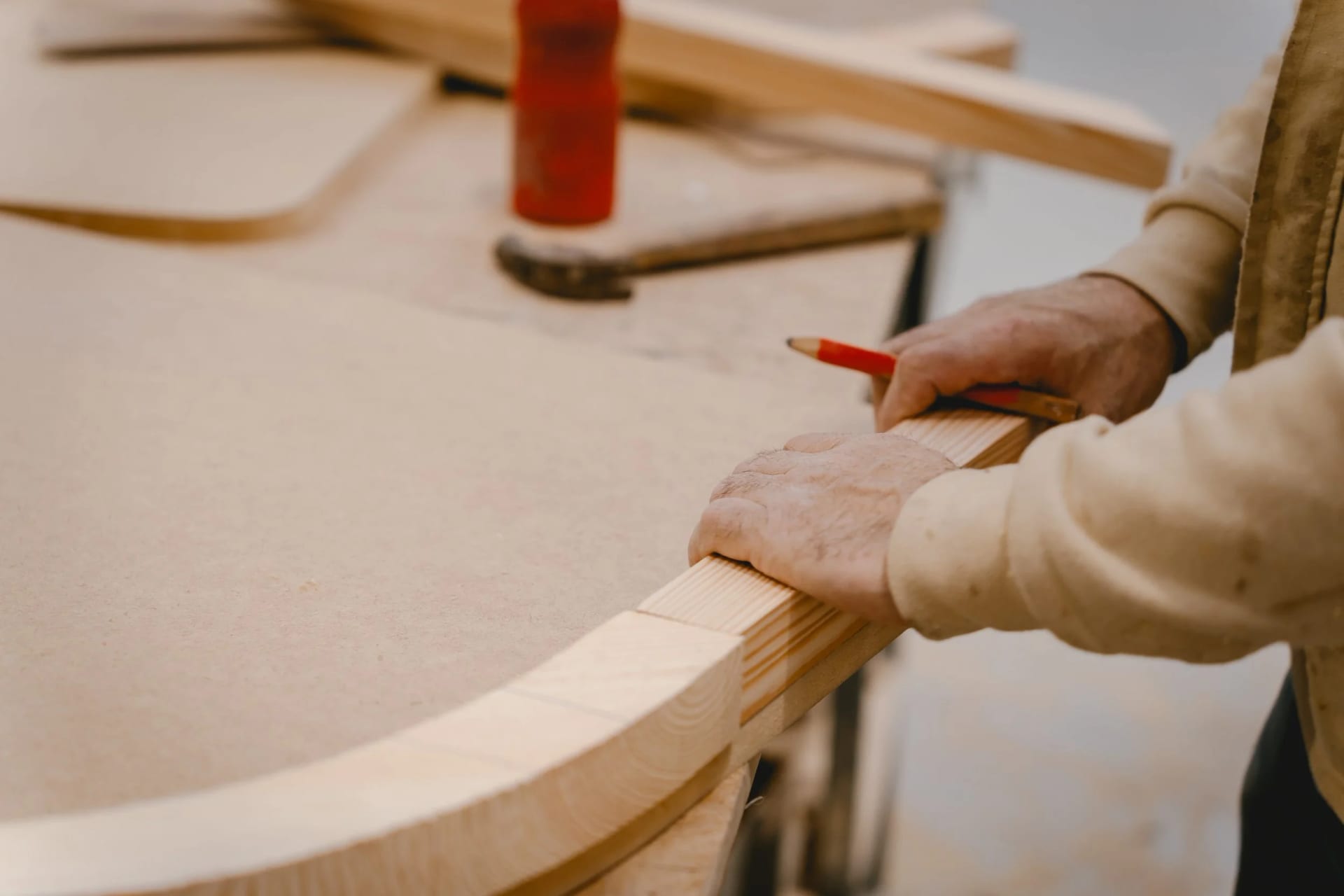
Width, depth and height decide whether a piece fits the room. Seat height, arm height, back height, the clearance beneath a table's apron and the diameter of a base decide whether it works. A dining chair with a 47 cm seat, under a table whose underside sits at 72 cm, leaves 25 cm of thigh clearance — usable, and tight for a tall guest. Drop the seat to 44 cm and the clearance is comfortable, but the sitter now meets the tabletop three centimeters lower. Both are defensible; neither is visible in a photograph. Ask for those numbers in writing, and ask which of them are nominal. Upholstered dimensions carry tolerance, because foam, wadding and cover settle once the piece is made up; a timber frame does not. A maker who volunteers a tolerance figure before being pushed is telling you something useful about how the workshop runs.
Treat the lead time as a position in the program, not a number
Elbra's pieces are made to order in 10 to 12 weeks. The number is the least useful part of it; where it sits in your program is the whole of it. Work backwards from the day the client walks in. Subtract transit, and the window in which site is actually able to receive furniture. Subtract the build. Then subtract the approval loop that precedes the build — drawing sign-off, sample approval, fabric confirmation — because those weeks sit before the clock starts and they are the ones most often left out of a schedule.
Which produces the single most valuable question you can ask: does the quoted lead time begin at order, or at final sign-off of drawings and fabric? The gap between those two dates can run to several weeks, and it is a common source of a date slipping without anyone doing anything wrong.
Two practical consequences follow. The first is that furniture belongs at the close of design development, alongside the joinery package, rather than in the styling phase — upholstery in particular, because fabric approval is the longest loop and the one most exposed to a client's hesitation. The second is that you should establish, before ordering, what happens if site slips: who stores the piece, for how long, and at whose cost. A finished sofa with nowhere to go is a problem best solved in the order confirmation.
Establish what can still change, and when each door closes
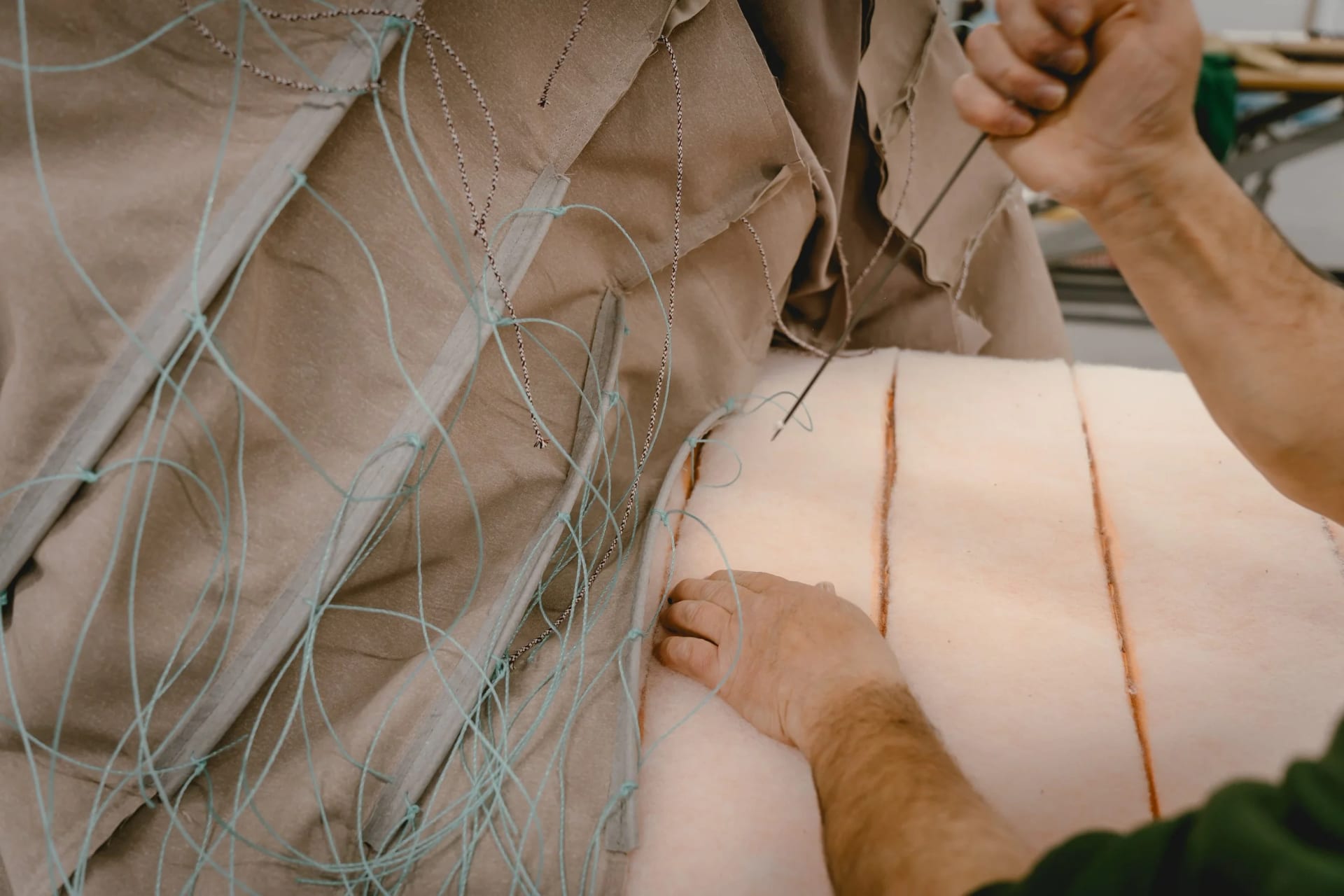
Configurable is a broad word, and on a made-to-order piece the honest answer is sequential rather than binary. Everything stays open until the operation that fixes it. Dimensions close first, because they set the cutting list. Hard materials close next — the wood, the stone, the metal — because they are ordered and machined ahead of assembly. Finish and color close later. Covers close last of all, since upholstery is the final operation on the bench.
Ask the maker to walk you through that sequence for the specific piece, and note the date attached to each stage. It costs nothing at enquiry and it is the only way to answer the question you will eventually be asked, usually on a Friday afternoon: the client has changed their mind, what does that cost. Early in the sequence the answer is a line on a drawing. Late in it, the answer is weeks rather than money — which is the more expensive of the two, because money can be found and a completion date cannot.
Settle two more things in the same conversation. Whether client-supplied fabric and leather are accepted, how many meters are needed, and who carries the risk if a fabric fails on the frame. And what a change request costs once the piece is in production, expressed as a rule rather than case-by-case goodwill.
Presenting a combination nobody has photographed yet
Here is the difficult moment in the client meeting. The photograph on the website shows the piece in oak with a pale linen. You are proposing walnut, a deep bouclé and a brushed brass foot, and your entire evidence base is three pieces of material the size of a postcard.
Two things close that gap, and they do different work. Physical samples answer color and hand, and they should be laid together, in the client's own room, at the hour of day the room is used — a north-facing room at four in the afternoon is not the light the sample was chosen in. A 3D configurator answers form: how a finish divides across a piece, where the metal actually reads at scale, whether a contrast that looks confident at swatch size survives at chair size. Elbra's configurator builds the combination on the real geometry and puts it on screen while the client is still in the room. Use both, and do not let either stand in for the other — a screen renders color under lighting conditions you do not control, and a postcard of fabric tells you nothing about proportion.
For your own visualizations, ask whether the maker will supply a 3D model. Dropping the real geometry into a scheme is faster than approximating it, and it removes the quiet error where the rendered sofa is a hand's width shorter than the one that arrives.
What a trade relationship should include beyond the terms
Commercial terms are the least interesting part of a trade program. The parts that return time to your practice are less advertised: a contact who knows which project you are calling about without being reminded; drawings that arrive on the first request; samples posted in days rather than weeks; and a maker willing to say plainly that something cannot be done, instead of agreeing in the meeting and discovering it in week six.
Elbra's trade program includes a resource library with specification material and downloadable 3D models, and specification and project support covers commissions where furniture sits inside a larger scheme. The list above applies whoever you specify with; it is simply easier to check against a maker that has written its answers down.
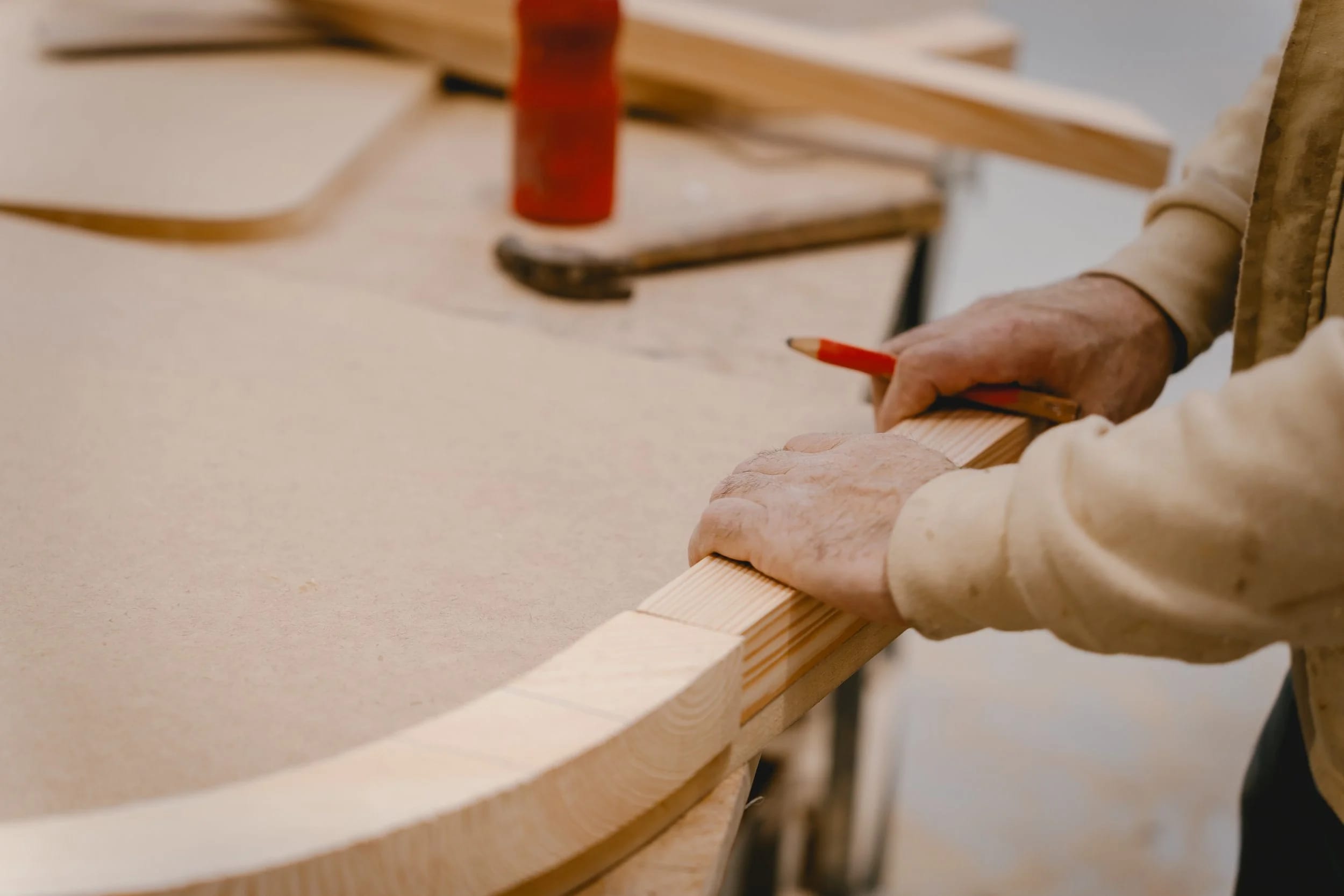
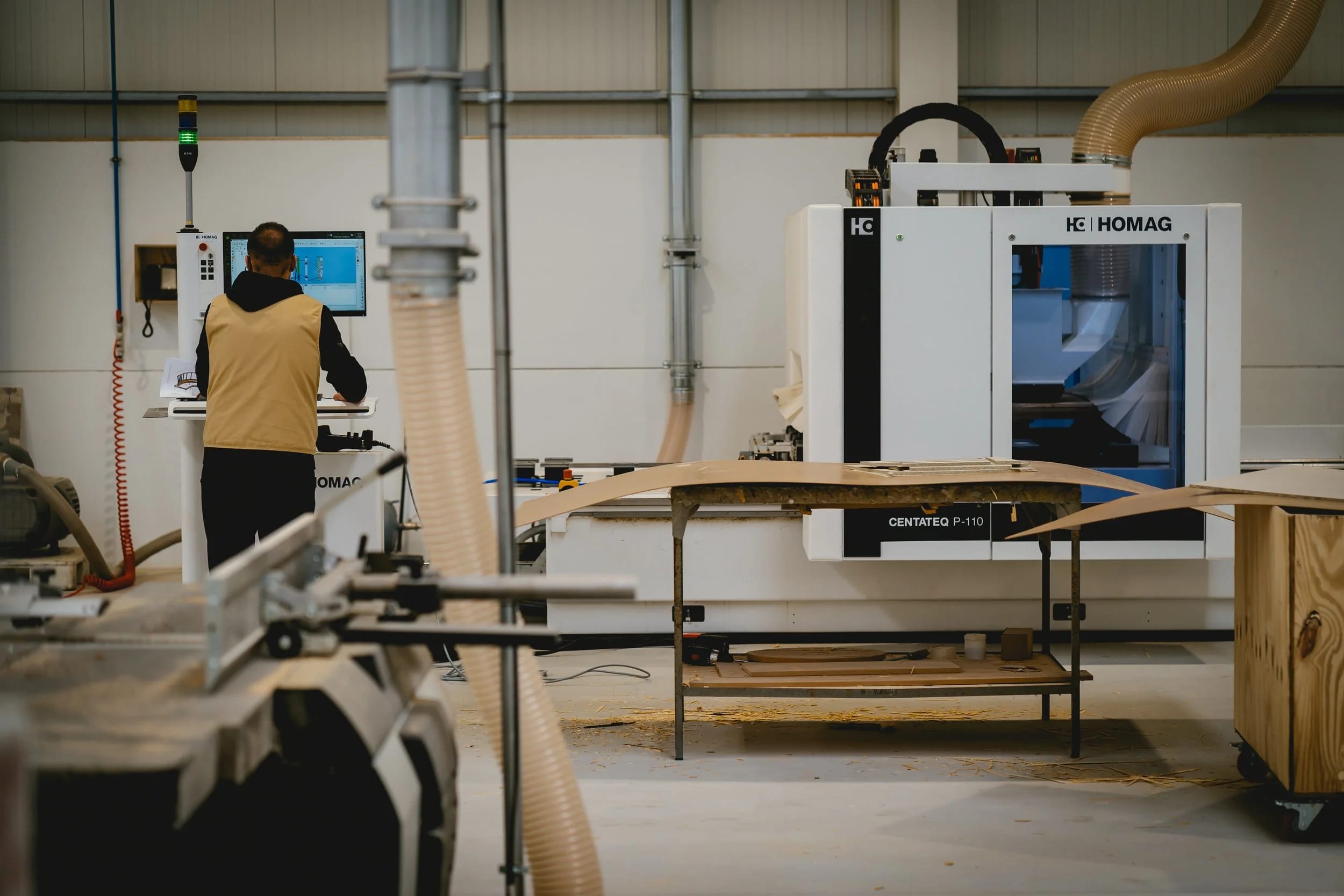
The strongest due diligence remains the oldest one. Elbra's atelier is in Paços de Ferreira, in the north of Portugal, the region long known as the country's furniture-making capital, and it receives visits by appointment. An afternoon watching panels come off a machining center and springs being tied by hand tells you more about whether a date will be met than any amount of documentation — and it is the one form of evidence a client never asks you to justify.
Browse the full collection, or start with the dining tables designers specify most.